
Emergency Tree Removal
5 Highlights on Emergency Tree Removal
24/7 Rapid Response
Our certified arborist crew deploys within hours when storm-damaged trees crash onto roofs, driveways, or powerlines. We don’t make you wait until Monday.
Certified Climbers and Crane Operations
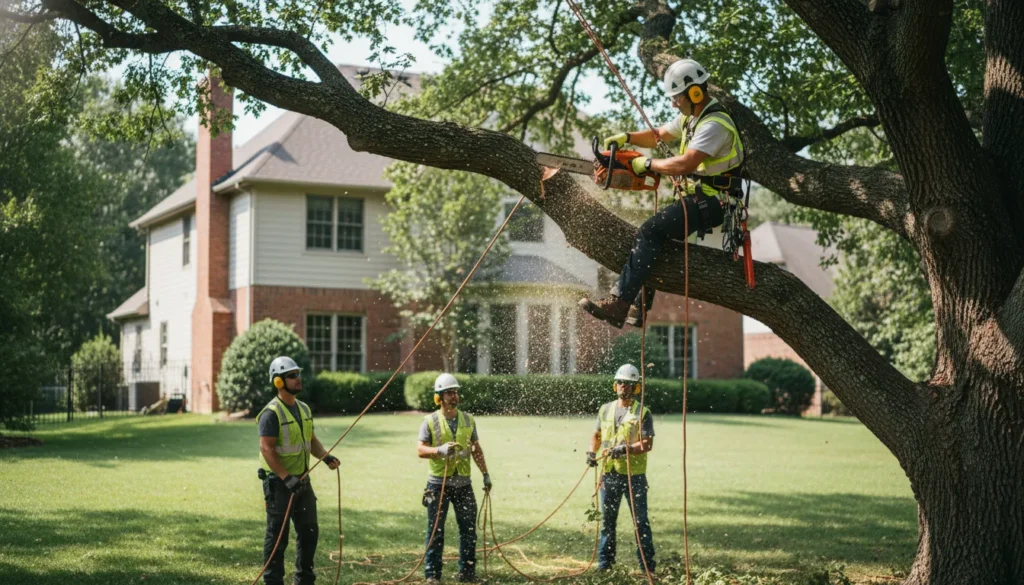
Licensed tree surgeons use aerial lifts and rigging systems to safely section and lower unstable trunks away from structures and utility lines.
Complete Debris Removal
We haul away all fallen limbs, brush, and wood chips. Your property gets cleared, not just cut.
Insurance Documentation
Our foreman photographs damage, provides detailed estimates, and works directly with adjusters to streamline your claim process.
Hazardous Tree Stabilization
When immediate removal isn’t possible, we cable, brace, and anchor leaning trees to secure your property until full extraction.
Why Choose Our Emergency Tree Removal
Emergency tree removal is a race against further damage. Quick Cut Tree Service has provided professional tree services and cleared hazardous trees from residential and commercial properties across the region for over fifteen years.
Our crews carry full liability insurance and workers’ compensation coverage. That protects you. Every climber holds ISA certification and trains quarterly on crane operations, rigging techniques, and powerline safety protocols.
We own our equipment. Bucket trucks, stump grinders, and chippers sit ready in our yard—not rented when storms hit. This means faster dispatch when a wind-thrown oak lands on your fence at 2 AM.
Our pricing stays honest. Every customer receives a free estimate, and the quote you approve is the invoice you pay. No surprise fees for after-hours calls or weekend work during declared emergencies.
We guarantee same-day assessment for urgent situations. A certified arborist inspects the fallen or unstable tree, identifies risks to structures and utility lines, and presents removal options on site.
Quick Cut Tree Service has earned top ratings from municipal contracts and residential clients alike. When lightning-struck pines or hurricane-toppled maples threaten your home, our team responds with professional speed, expert precision, and deep knowledge of tree trimming, tree pruning, and safe removal practices.
Signs You Need Emergency Tree Removal
Trunk Cracks and Splits: Deep vertical fractures running down the main trunk signal structural failure. These cracks often appear after ice storms, high winds, or advanced disease. A split trunk can collapse without warning, dropping thousands of pounds onto whatever sits below.
Sudden Lean: Trees lean gradually over decades. A sudden tilt means root failure. Check the soil around the base for heaving or exposed roots. Uprooted trees rarely recover and typically fall within days. The lean direction tells you exactly what’s at risk.
Hanging Limbs and Widow-Makers: Storm-damaged branches lodged in the canopy will fall. Arborists call these hangers “widow-makers” for good reason. Dead limbs that missed routine pruning or branches weakened by pest infestation wedge overhead and pose immediate danger to anyone walking beneath. Never attempt to shake or pull these down yourself.
Contact with Powerlines: Fallen branches draped across utility lines create electrocution and fire hazards. Stay back at least fifty feet. Call your power company first, then call us. Our crews coordinate with utility providers to safely section and remove trees from energized lines.
Root Plate Lifting: When the circular mound of soil and roots at a tree’s base rises on one side, the entire tree is tipping. This happens during saturated soil conditions after floods, prolonged rain, or excessive irrigation. A lifted root plate means extraction is imminent—the tree cannot be saved and must be removed before it falls completely.
Our Emergency Tree Removal Process
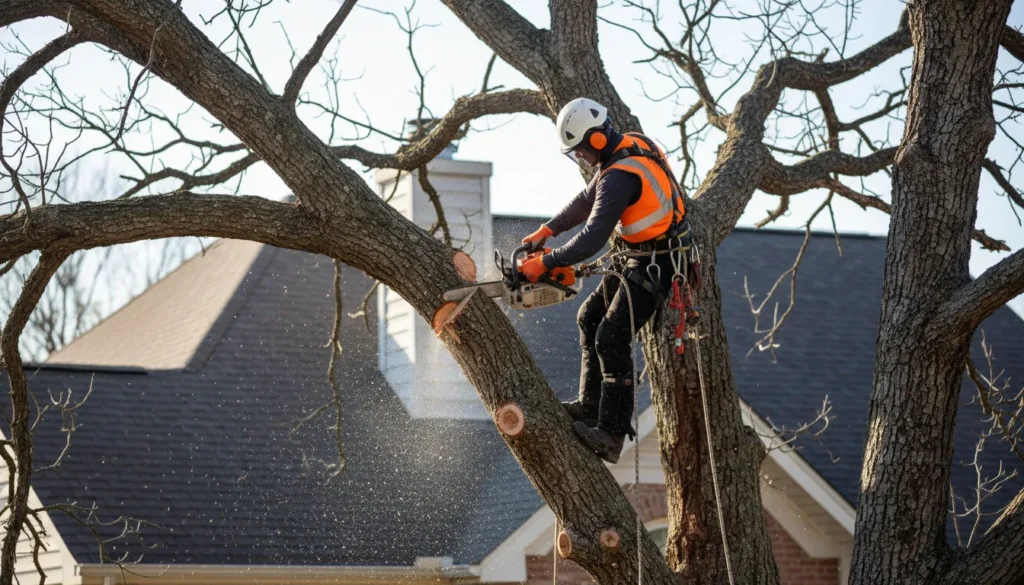
Emergency tree removal is a systematic operation. We follow strict protocols to protect your property and our crew.
Assessment
A certified arborist arrives to inspect the hazardous tree. We identify lean direction, structural damage, proximity to powerlines, and potential drop zones. This assessment determines equipment needs and crew size.
Rigging and Sectioning
Climbers ascend using harnesses and saddles, then rig ropes and pulleys to control each cut. We section the tree from top down, applying the same precision used in our trimming services to lower limbs safely. Large trunks get notched and felled in calculated directions.
Debris Removal
The chipper processes branches into mulch. Chainsaws buck trunk sections into manageable logs. Our crew loads everything for hauling—nothing stays behind unless you want firewood.
Stump Grinding
We grind the remaining stump below grade and fill the hole with sawdust and topsoil. Your lawn returns to usable condition, ready for any landscape design plans you have in mind.
Brands We Use
Quick Cut Tree Service equips our crews with professional-grade tools from trusted manufacturers.













Your emergency tree removal job runs on gear that performs when stakes are highest.
Other Services
emergency tree removal
urgent tree removal
storm damage tree service
fallen tree removal
downed tree removal
tree debris cleanup
hazardous tree removal
dangerous tree removal
unstable tree cutting
24 hour tree service
same day tree removal
after hours tree removal
storm damaged tree removal
wind thrown tree removal
hurricane tree cleanup
FAQs About Emergency Tree Removal
What qualifies as emergency tree removal?
Emergency tree removal addresses immediate threats to people, property, or infrastructure. Fallen trees on roofs, vehicles, or driveways qualify. So do unstable trees leaning toward structures, limbs tangled in powerlines, and uprooted trunks blocking access roads.
When should I call for emergency tree service?
Call immediately when a tree falls or shifts position suddenly. Don’t wait to see if a leaning tree stabilizes—it won’t. Storm-damaged trees with hanging limbs or cracked trunks need same-day assessment before conditions worsen.
Why does emergency tree removal cost more than scheduled service?
Emergency calls require immediate crew deployment, after-hours labor, and specialized equipment on standby. The urgency also involves higher risk—working around damaged structures, downed powerlines, and unstable wood. These factors increase operational costs.
How long does emergency tree removal take?
Small fallen trees clear in two to four hours. Large removals involving crane work, multiple structures, or utility line coordination may take a full day. Our arborist provides time estimates during the initial assessment.
Can you remove a tree that fell on my house?
Yes. We coordinate with your insurance adjuster and work carefully to section the trunk without causing additional roof damage. Tarping and temporary repairs fall outside our scope, but we’ll recommend trusted contractors.
Does insurance cover emergency tree removal?
Most homeowner policies cover removal when a tree damages insured structures. Trees that fall without hitting anything typically aren’t covered. We document all damage and provide itemized invoices for your claim submission.