Dead & Hazardous Tree Removal
5 Highlights on Dead & Hazardous Tree Removal
ISA Certified Arborists
assess every dead or dying tree before removal begins. Our crew conducts a detailed tree inspection, evaluating trunk stability, root upheaval, and crown decay to determine the safest extraction method for your property.
Crane Assisted Removal
handles hazardous trees near powerlines, structures, and fences. We rig and lower heavy limbs in controlled sections rather than dropping them unpredictably.
Emergency Response
dispatches crews within hours for storm damaged, fallen, or leaning trees. Wind thrown and lightning struck trees receive urgent attention before they collapse onto driveways or rooftops.
Complete Debris Disposal
includes chipping branches, grinding stumps, and hauling logs from your landscape. We leave properties clear of brush, woodchips, and sawdust.
Full Insurance Coverage
protects your home, vehicles, and structures during hazardous tree extraction. Our liability policy covers damage to sidewalks, fencing, and utility lines throughout the removal process.
Why Choose Our Dead & Hazardous Tree Removal
Dead and hazardous tree removal demands certified professionals with specialized rigging equipment. Quick Cut Tree Service provides a professional tree removal service backed by ISA certified arborists who diagnose tree conditions accurately. We don’t guess. We inspect trunk cavities, fungal conks, borer damage, and root rot before recommending removal.
Our climbers hold OSHA safety certifications. They’ve dismantled hundreds of unstable, leaning, and storm damaged trees across residential and commercial properties. Each groundsman understands rigging mechanics. They know how to section a compromised trunk without letting it fall toward structures.
We own bucket trucks, aerial lifts, and cranes for trees that standard climbing can’t address safely. Hollow trunks and brittle deadwood require mechanical assistance. Our equipment handles widow makers, hangers, and snags that endanger crews and property alike.
Quick Cut Tree Service guarantees written estimates before work starts. No hidden fees appear after we’ve felled your hazardous tree. We pull permits when municipalities require them. Our contracts specify exactly what we’ll remove, chip, grind, and haul away.
Licensed, insured, and trusted across the region. That’s our commitment to every dead tree removal job.
Signs You Need Dead & Hazardous Tree Removal
Fungal Growth on the Trunk: Mushrooms, conks, and shelf fungi indicate internal decay. Heartwood rot weakens structural integrity from the inside. A tree displaying fungal fruiting bodies near its base likely has extensive damage you can’t see. These trees fail without warning.
Significant Lean Development: Trees that suddenly lean weren’t always that way. Recent lean indicates root failure, soil upheaval, or trunk compromise. Measure the angle. Compare it to photographs from previous years. Progressive leaning signals imminent collapse, especially after heavy rain saturates the soil around destabilized roots.
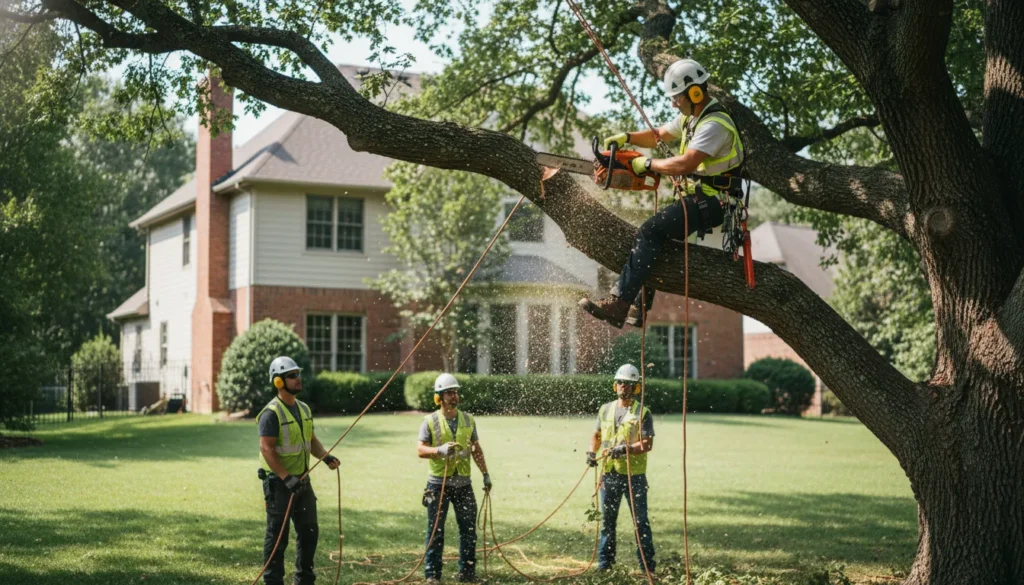
Large Dead Branches in the Crown: Arborists call these widow makers. Dead limbs with no leaves suspended in the canopy will fall eventually. Wind accelerates the process. Brittle, barkless branches hanging over walkways, driveways, or play areas require immediate attention beyond routine pruning or tree trimming. One falling bough can cause serious injury or property damage.
Bark Splitting and Trunk Cracks: Vertical cracks running down the trunk expose sapwood and cambium to infection. Deep splits indicate internal stress. Frost cracks, lightning strikes, and mechanical wounds create entry points for decay fungi and boring insects. Cracked trunks often fail during storms.
Pest Infestation Evidence: Beetle exit holes, termite tubes, and borer sawdust signal serious problems. Infested trees weaken rapidly. Emerald ash borers, bark beetles, and carpenter ants compromise structural wood. Infected trees spread pests to healthy neighbors. Removal stops the infestation cycle.
Our Dead & Hazardous Tree Removal Process
Site Assessment
A certified arborist performs a complete inspection of the hazardous tree and surrounding area. We evaluate lean direction, crown weight distribution, trunk cavities, and root stability. We identify powerlines, structures, fences, and landscaping that need protection.
Removal Plan Development
We determine whether the tree requires climbing, bucket truck access, or crane assistance. Hollow and severely decayed trunks often can’t support a climber’s weight. We select the appropriate rigging configuration and establish drop zones to ensure safe removal of limbs and trunk sections.
Limb Removal
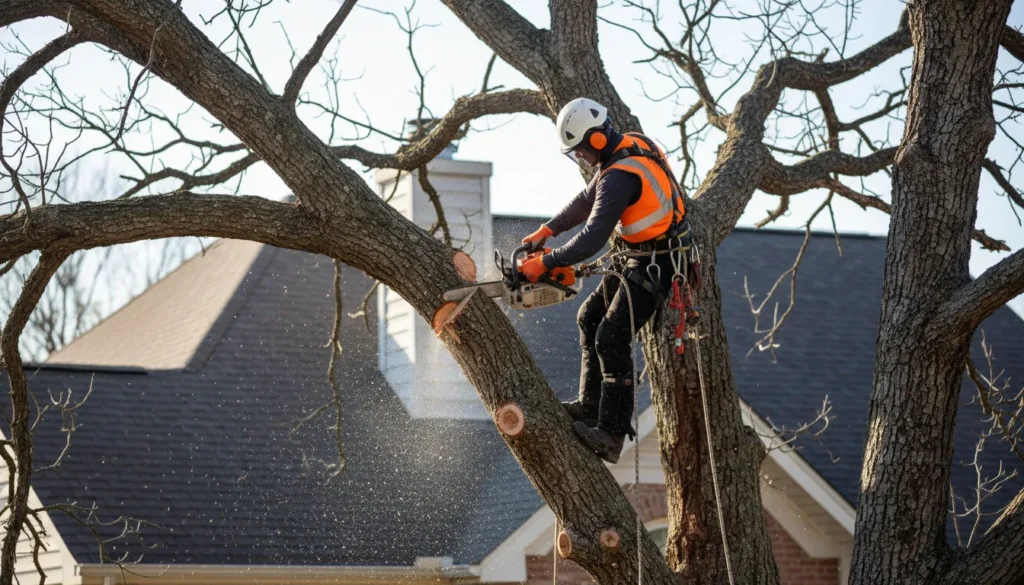
Climbers or aerial lift operators remove branches systematically from the crown downward. We rig heavy limbs with ropes, pulleys, and slings to lower them safely. Groundsmen guide each piece away from obstacles.
Trunk Sectioning
We cut the trunk in manageable sections. Notch cuts control fall direction. Back cuts release each section cleanly. Severely compromised trunks get dismantled piece by piece rather than felled whole.
Stump Grinding and Cleanup
Our stump grinder removes the remaining stump below grade. We chip branches, buck logs, and clear all debris. You choose whether to keep firewood or have us haul everything away.
Brands We Use
Quick Cut Tree Service relies on these trusted manufacturers:









Every piece of safety equipment meets OSHA standards.
Other Services
dead tree removal
dying tree removal
decayed tree extraction
hazardous tree removal
dangerous tree removal
unsafe tree cutting
emergency tree removal
urgent tree service
storm damaged tree removal
dead tree service
hazard tree service
compromised tree removal
tree removal near me
local tree removal
residential tree removal
professional tree removal
removal service
pruning
FAQs About Dead & Hazardous Tree Removal
What makes a tree hazardous?
A tree becomes hazardous when it poses risk to people or property. Dead, dying, leaning, hollow, or structurally unsound trees qualify. Storm damaged trees with hanging limbs, uprooted root balls, or cracked trunks also meet hazardous criteria. Location matters too. A dead tree in an empty field presents less hazard than one overhanging your garage.
When should I remove a dead tree?
Remove dead trees before they fall unpredictably. Dead wood becomes brittle and breaks without warning. Schedule removal as soon as you confirm the tree has died. Waiting allows decay to progress, making removal more dangerous and expensive.
Why can't I remove a hazardous tree myself?
Hazardous trees behave unpredictably. Decayed trunks don’t fall where you expect. Hollow sections collapse. Hung up limbs release suddenly. Professional arborists understand these failure patterns. They carry insurance that covers property damage. DIY removal of compromised trees causes injuries and deaths every year.
How do arborists remove trees near powerlines?
We coordinate with utility companies when trees contact or threaten powerlines. Bucket trucks and cranes position climbers safely away from electrical hazards. We section and lower limbs rather than letting them fall into wires. Some situations require the utility to disconnect power temporarily.
Can a leaning tree be saved?
Sometimes. Young trees with minor lean can be staked and cabled. Mature trees that suddenly lean usually have root damage or trunk failure. An arborist assesses whether the lean resulted from correctable causes or indicates structural compromise requiring removal.
Does insurance cover hazardous tree removal?
Homeowner policies often cover removal when a tree falls on an insured structure. Standing dead trees typically aren’t covered until they cause damage. Check your policy. We provide detailed invoices and documentation for insurance claims.