Tree Health Care
5 Highlights on Tree Health Care
Certified Arborist Inspections
Our ISA certified arborists assess every tree on your property using resistograph testing, tomograph imaging, and increment borer sampling to detect internal decay, cavity formation, and structural defects before they cause failure.
Integrated Pest Management Programs
We diagnose and treat infestations from emerald ash borer, Asian longhorned beetle, woolly adelgid, bark beetle, scale, aphid, and spider mite populations using targeted insecticide applications and trunk injection systems.
Disease Diagnosis and Treatment
Our crew identifies fungal, bacterial, and viral pathogens including oak wilt, Dutch elm disease, fire blight, anthracnose, powdery mildew, and root rot, then applies fungicide drenches, soil amendments, and mycorrhizae inoculations.
Deep Root Fertilization and Soil Care
We decompact soil, aerate the critical root zone, and infuse nutrient deficient ground with custom fertilizer blends using soil probes and radial trenching techniques to restore vigor to stressed and declining trees.
Root Collar Excavation with Air Spade
Our team exposes the root flare to identify girdling roots, root rot, and compacted soil conditions that choke the cambium and phloem, then prunes and amends as needed to re-establish healthy root function.
Our Tree Health Care Services:
Why Choose Our Tree Health Care
Tree health care is the foundation of every service we provide at Quick Cut Tree Service. We don’t just cut trees. We keep them alive. Our tree care expertise spans every phase of a tree’s life, from planting and preventive maintenance to diagnosis, treatment, and tree removal when a tree cannot be saved.
Our team includes certified arborists and consulting arborists who hold credentials through the International Society of Arboriculture. Every diagnosis follows ANSI A300 standards, and every treatment plan reflects current arboricultural science. We carry full insurance and licensing for all chemical applications, trunk injections, and soil treatments performed on residential and commercial properties. Our tree services are backed by the training, equipment, and certifications that set us apart from general landscaping companies.
We invest in professional grade diagnostic tools. Our resistograph detects internal decay columns. Our tomograph maps cross sections of trunk integrity. Our soil probes measure compaction, pH, and nutrient levels at the root zone. These aren’t guesses. They’re data driven assessments.
Quick Cut Tree Service also guarantees follow up monitoring on all plant health care programs. After we treat a diseased or infested tree, we return to inspect callus development, new leaf out patterns, and pest population levels. If a treatment doesn’t hold, we retreat at no additional charge during the warranty period.
You won’t find a more qualified tree health care provider in the area. Our crews train year round on the latest trunk injection protocols, integrated pest management strategies, and soil amendment techniques. We treat your trees like the long term investments they are.
Signs You Need Tree Health Care
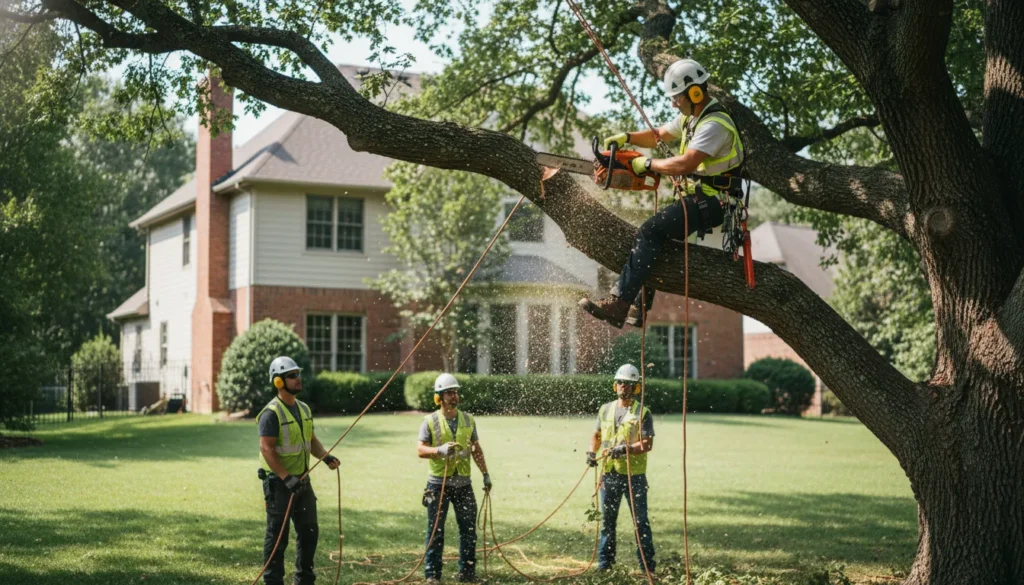
Tree health care is something most property owners overlook until visible damage appears. Here are five signs your trees need professional tree care and attention right now.
Chlorotic or Yellowing Leaves During Growing Season: Leaves that turn yellow while the canopy should be green indicate nutrient deficiency, root damage, or vascular disease. Chlorotic foliage often signals iron or manganese depletion in compacted soil. It can also point to phloem disruption caused by girdling roots or fungal pathogens attacking the xylem. A certified arborist can run soil tests and foliar analysis to pinpoint the cause and prescribe deep root fertilization or trunk injection treatments.
Fruiting Bodies, Conks, or Bracket Fungus on the Trunk: Mushrooms growing from bark or at the root flare are fruiting bodies of wood decay fungi. They indicate active heart rot, butt rot, or root rot inside the tree. This is not cosmetic. Saprophytic fungi break down heartwood and sapwood, creating cavities that compromise structural integrity. Our arborists use resistograph drilling to measure the extent of internal decay and determine whether the tree can be treated or needs tree removal.
Premature Defoliation or Leaf Drop: Trees that lose leaves in midsummer are symptomatic of anthracnose, leaf spot, bacterial leaf scorch, or borer infestation. Repeated defoliation exhausts the tree’s energy reserves and weakens its ability to compartmentalize wounds. Without intervention, the tree enters a cycle of decline and dieback that becomes irreversible and may ultimately require tree removal.
Bark Splitting, Cankers, or Oozing Sap: Cankers are dead sections of bark caused by fungal or bacterial infection. Oozing sap from the trunk often accompanies bacterial wetwood or borer activity. Sunscalded bark on the south facing side of young trees cracks and invites pathogenic organisms into exposed cambium tissue.
Crown Dieback Exceeding 25 Percent: Dead branches accumulating in the upper crown signal root system failure, vascular wilt disease, or chronic drought stress. When dieback reaches a quarter of the canopy, the tree’s ability to photosynthesize and transpire drops below sustainable levels. A tree risk assessment at this stage determines whether targeted pruning, fertilization, and pest treatment can reverse the decline or whether tree removal is the safest course of action.
Our Tree Health Care Process
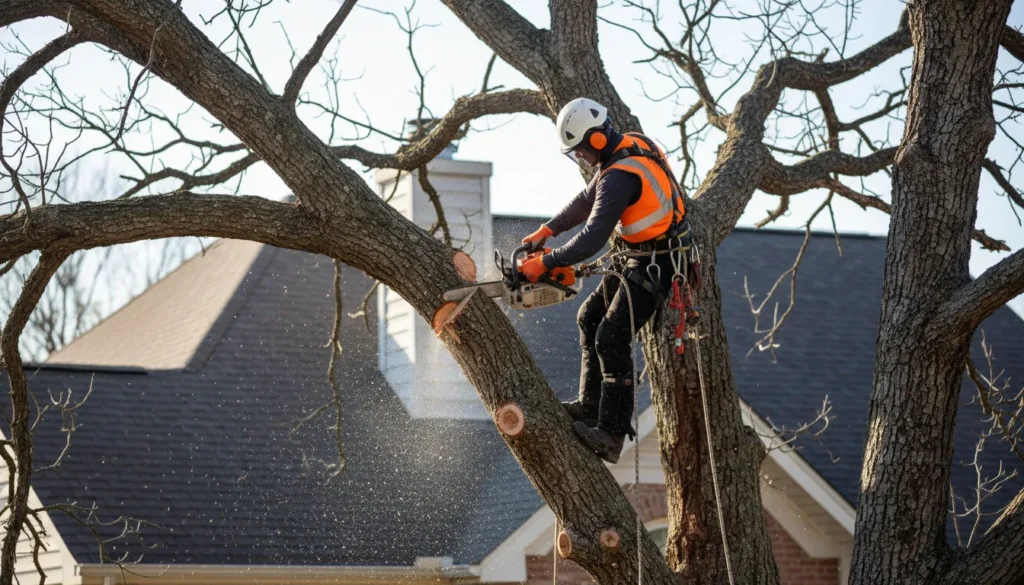
Tree health care at Quick Cut Tree Service follows a structured, repeatable process from first call to final follow up. Our tree services are designed to deliver measurable results at every stage.
On Site Tree Assessment
A certified arborist walks your property and inspects every tree. We examine the crown for dieback, deadwood, and epicormic shoot growth. We check the trunk for cavities, cankers, conks, and included bark. We evaluate the root flare for girdling roots and soil compaction. We note any signs of pest infestation or fungal disease.
Diagnostic Testing
When visual inspection isn’t enough, we deploy diagnostic instruments. Resistograph readings measure wood density inside the trunk. Soil probes test pH, moisture, and nutrient content at the root zone. We collect leaf and tissue samples for laboratory pathogen identification when bacterial or viral infection is suspected.
Treatment Plan Development
Our consulting arborist builds a written plant health care plan tailored to each tree. The plan specifies treatments such as trunk injection, fungicide application, insecticide spray, deep root fertilization, soil decompaction, mycorrhizae inoculation, or root collar excavation. We include timelines, costs, and expected outcomes.
Treatment Execution
Our licensed crew performs all treatments on schedule. We inject systemic insecticides and fungicides directly into the vascular system using calibrated trunk injection equipment. We aerate and amend soil with air spade tools. We apply granular and liquid fertilizer blends through soil probes at the drip line.
Monitoring and Follow Up
We return at scheduled intervals to inspect treatment response. We look for new leaf out, callus formation over wounds, reduced pest populations, and improved canopy density. We adjust the care plan based on what we observe.
Brands We Use
Tree health care demands reliable, professional grade products. Quick Cut Tree Service uses only trusted brands with proven track records in arboricultural applications.




Our applicators hold current licensing, and we maintain full liability coverage for every treatment we perform on your property.
Other Services
tree health care
plant health care
tree disease treatment
tree disease diagnosis
arborist tree inspection
fungal infection tree
tree pest treatment
insect infestation tree service
trunk injection service
deep root fertilization
tree fertilization service
soil amendment trees
tree health assessment
tree risk assessment
certified arborist near me
tree removal
tree care
tree services
FAQs About Tree Health Care
What is tree health care?
Tree health care is a comprehensive approach to maintaining the biological vitality of trees through diagnosis, treatment, and prevention of disease, pest infestation, and environmental stress. It includes soil management, root care, trunk injection, pest control, and ongoing monitoring performed by certified arborists. As one of the most essential tree services a property owner can invest in, professional tree care protects the long term value and safety of your landscape.
When should I schedule a tree health care inspection?
Schedule an inspection in early spring before leaf out or in late fall after leaves drop. These dormant periods give arborists clear views of structural defects, cankers, and fungal fruiting bodies. If you notice sudden leaf drop, bark damage, or insect activity at any time of year, call immediately.
Why do trees need professional health care?
Trees in urban and suburban settings face compacted soil, restricted root zones, pollution, construction damage, and pest pressures that forest trees don’t encounter. Professional tree care addresses these stressors with targeted fertilization, soil decompaction, pest management, and disease treatment that homeowners can’t replicate with store bought products.
How does trunk injection work?
A certified arborist drills small ports into the trunk’s sapwood and connects pressurized capsules containing systemic fungicide or insecticide. The tree’s vascular system pulls the chemical through the xylem and distributes it into branches, leaves, and roots. This method delivers precise doses with minimal environmental exposure.
Can a dying tree be saved with tree health care?
It depends on the cause and extent of decline. Trees with less than 50 percent crown dieback, intact root systems, and identifiable treatable conditions often respond well to aggressive care programs. Our arborists assess each tree honestly and recommend tree removal when treatment won’t produce meaningful recovery.
Does tree health care include pest control?
Yes. Integrated pest management is a core component. We identify pest species, assess population levels, and apply targeted treatments ranging from systemic trunk injections for borers to foliar sprays for caterpillars, aphids, and mites. We monitor results and adjust applications each season.