Clearance Pruning
5 Highlights on Clearance Pruning
Certified arborists
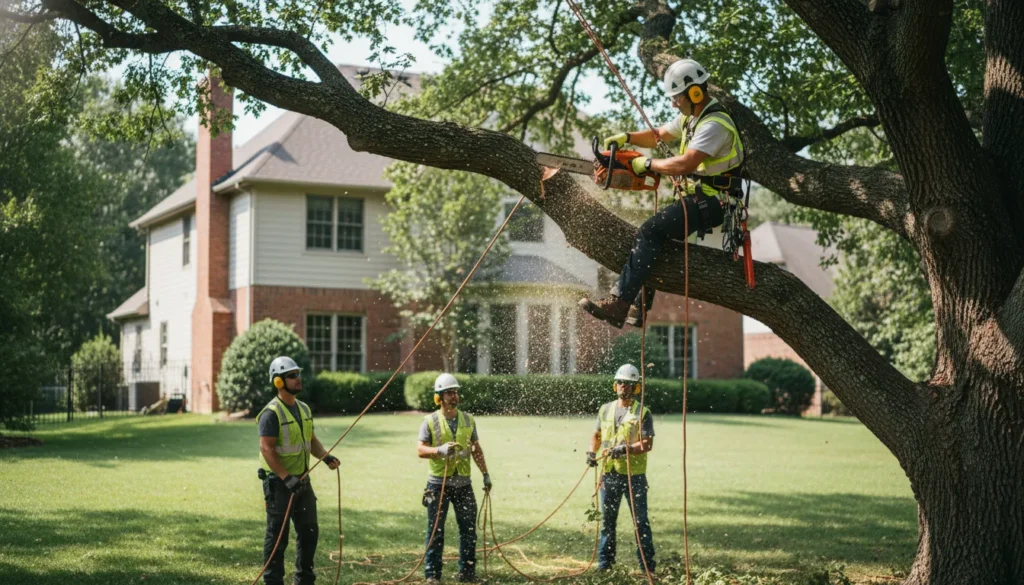
assess every overgrown branch threatening your roof, powerline, or driveway before any cutting begins. We identify encroaching limbs in close proximity that rub against shingles, contact utility conductors, or obstruct vehicle access, evaluating the risk each branch presents.
Aerial lift and bucket truck access
allows our crew to reach overhanging branches at any height up to 75 feet without damaging your lawn or landscaping. Mature trees near structures require specialized equipment for safe limb removal.
Utility line clearance
follows strict right-of-way protocols. Our licensed climbers prune branches away from conductors, transformers, and poles while maintaining proper clearance distances mandated by local codes.
Roof and gutter protection
removes lateral branches scraping against fascia, abrading shingles, and depositing foliage and debris into gutters. We cut back encroaching growth to prevent structural damage during storms.
Driveway and pathway clearing
eliminates low-hanging limbs that obstruct vehicles, block sightlines along sidewalks, and create hazardous conditions for pedestrian and vehicle traffic. Our selective pruning maintains tree health while restoring full access.
Why Choose Our Clearance Pruning
Clearance pruning is specialized tree care work requiring certified professionals who understand both tree biology and structural protection. Quick Cut Tree Service employs ISA-certified arborists trained in directional pruning techniques that remove obstructive growth without compromising tree health.
Our crew carries full liability insurance and workers’ compensation coverage. Every job site includes a foreman who supervises cutting operations and ensures proper collar cuts that promote healing. We don’t leave stubs. We don’t top trees. We prune correctly.
Licensed utility line clearance qualifies our climbers to work near energized conductors. This certification matters when overhanging branches contact or approach powerlines on your property. Unqualified contractors create dangerous situations.
We guarantee complete debris removal. Branches, chips, and logs leave with our crew. Your driveway stays clear. Your roof stays protected. Your property looks better than before we arrived, restoring both safety and aesthetics.
Quick Cut provides written estimates with detailed information on every branch scheduled for removal. No surprises. No hidden fees. The contract specifies exactly which limbs we’ll prune and how much clearance you’ll gain. Residential and commercial property owners trust our transparent pricing and professional execution.
Signs You Need Clearance Pruning
Branches touching your roof: Lateral limbs resting on shingles cause abrasion damage during wind events. The constant rubbing wears through protective granules and creates entry points for moisture. Overhanging branches also drop leaves, twigs, and organic debris that accumulate in valleys and gutters. This debris holds moisture against roofing materials, promotes moss growth, and accelerates decay. Trapped moisture also creates conditions favorable to disease and insect activity in surrounding wood.
Limbs approaching powerlines: Encroaching branches within ten feet of utility conductors present fire and electrocution hazards. Wind sway brings growth into contact with energized lines. Dead or dying limbs near transformers can fall and cause outages. Your utility company may require clearance pruning to maintain safe distances within their easement.
Obstructed driveway access: Low-hanging branches force vehicles to navigate around overgrown canopy. Mature trees with drooping laterals reduce vertical clearance below safe heights. Delivery trucks, emergency vehicles, and moving vans cannot access properties with obstructive growth blocking the drive or overhanging sidewalks.
Scraping against siding or fascia: Branches contacting your home’s exterior leave marks and damage paint. Repeated contact during storms gouges wood trim and vinyl siding. The movement creates noise complaints and allows pests to access your structure through damaged areas. Overgrown plants and vines following branch pathways compound the problem.
Blocked sightlines at intersections: Dense canopy growth obscures visibility where driveways meet streets. Overgrown corner trees create blind spots for pedestrians and drivers, posing a serious traffic hazard. Municipal codes often require property owners to maintain clear sightlines through selective pruning.
Our Clearance Pruning Process
Clearance pruning begins with a thorough property assessment. Our arborist inspects every tree near structures, powerlines, and access points. We identify overhanging branches, measure current clearance distances, and note any dead or damaged limbs requiring removal.
You receive a detailed written estimate. This document lists each tree, specifies which branches we’ll prune, and states the clearance distance we’ll achieve. We photograph problem areas so you understand exactly what work we’re proposing. Once branches are pruned, each tree receives a final inspection.
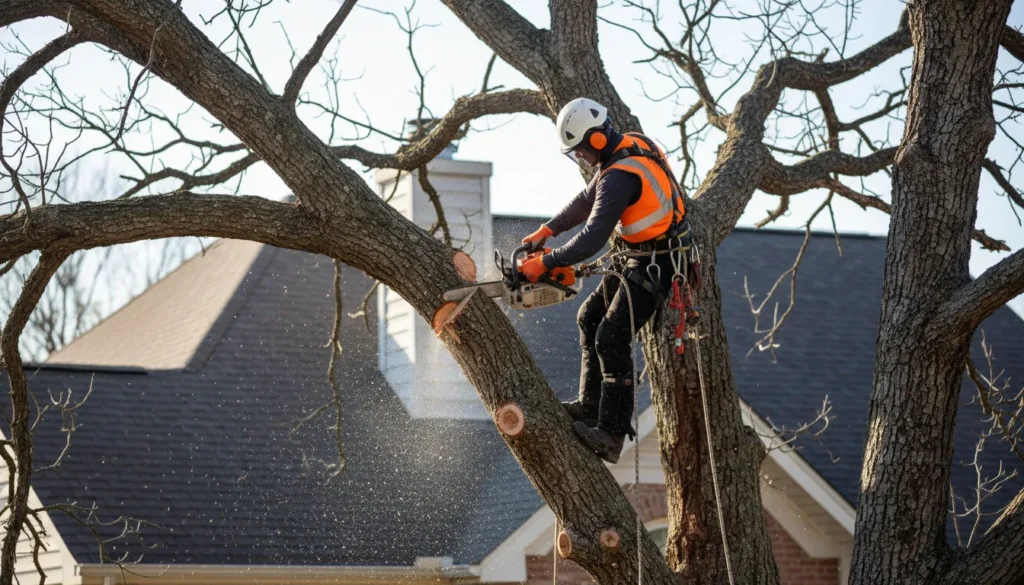
On service day, our crew arrives with appropriate equipment. Bucket trucks access tall canopy growth. Climbers rig ropes for branches requiring controlled lowering near structures. Groundsmen position themselves to guide cut limbs away from roofs, vehicles, and landscaping.
We make proper pruning cuts at the branch collar. This technique promotes rapid wound closure and prevents decay from entering the trunk. No stubs remain. No bark tears damage the cambium layer.
Debris goes directly into our chipper. Logs get sectioned and hauled away. We rake the work area and blow driveways clean. A final walkthrough with you confirms all specified clearance pruning is complete.
Brands We Use
Quick Cut Tree Service operates professional-grade equipment from trusted manufacturers.








Quality equipment protects both our crew and your property.
Other Services
clearance pruning
branch clearance cutting
overhang removal service
roof clearance pruning
roofline branch trimming
shingle protection pruning
powerline clearance
utility line tree trimming
conductor clearance service
driveway tree pruning
access clearance cutting
low branch removal
structural clearance pruning
building clearance trimming
encroachment pruning service
FAQs About Clearance Pruning
What is clearance pruning?
Clearance pruning removes branches that encroach on structures, utility lines, driveways, and pathways. Arborists selectively cut limbs to create safe distances between tree canopy and objects requiring protection. The goal is maintaining tree health while eliminating contact, obstruction, and overhang problems.
When should I schedule clearance pruning?
Schedule clearance pruning when branches touch your roof, approach powerlines within ten feet, or hang below seven feet over driveways. Late winter works well for deciduous trees because bare canopy reveals branch structure clearly. Evergreen and coniferous trees accept pruning year-round.
Why does clearance pruning matter for my roof?
Branches rubbing against shingles cause abrasion damage that shortens roof lifespan. Overhanging limbs drop debris into gutters and valleys. Fallen branches during storms puncture roofing materials. Proper clearance eliminates these damage sources.
How much clearance do you create?
Standard roof clearance removes branches to six feet from the structure. Powerline clearance follows utility requirements, typically ten feet from conductors. Driveway clearance provides fourteen feet of vertical space for vehicle access. We customize distances based on your specific needs.
Can clearance pruning damage my trees?
Proper clearance pruning performed by certified arborists does not harm trees. We make cuts at branch collars where trees naturally compartmentalize wounds. Improper techniques like topping or stub cuts cause decay and structural weakness. Our crew follows ANSI A300 pruning standards.
Does Quick Cut handle permit requirements?
Many municipalities require permits for pruning near utility easements or removing large branches. We research local requirements, obtain necessary permits, and ensure all clearance pruning complies with municipal codes and utility company regulations.