Tree Cabling & Bracing
5 Highlights on Tree Cabling & Bracing
Certified Arborist Assessments
Every tree cabling and bracing project starts with a thorough tree risk assessment performed by our certified arborists, who inspect codominant stems, bark inclusions, and structural weak points before recommending a support system.
High Strength Steel and Synthetic Cable Systems
We install both galvanized steel cable and modern synthetic cable options, selecting the right material based on your tree’s crown load, wind exposure, and long term stability needs.
ANSI A300 Compliant Installations
Our tree cabling and bracing work follows ANSI A300 standards for supplemental support systems, so every bolt, brace rod, and cable meets the arboricultural industry’s top safety and performance benchmarks.
Non Invasive and Invasive Options
Quick Cut Tree Service offers both non invasive synthetic strap systems and traditional invasive hardware installations using lag bolts, eye bolts, and thimbles, matched to each tree’s condition and your property goals.
Storm Damage Prevention
Our bracing and cabling systems reduce the risk of limb failure, trunk splitting, and canopy collapse during heavy wind events, protecting your home, structures, and landscape from costly storm damage.
Why Choose Our Tree Cabling & Bracing
Tree cabling and bracing is a specialized arboricultural service that demands precision, the right hardware, and deep knowledge of tree biomechanics. It is equal parts art and science. Quick Cut Tree Service brings all three to every job.
Our team includes ISA certified arborists who assess each tree’s structural integrity before recommending a support system. We don’t guess. We inspect the crotch unions, check for cavities and decay, evaluate codominant stems, and measure load distribution across the crown. That assessment drives every thought and decision we make about cable placement, brace rod sizing, and hardware selection.
We’ve installed hundreds of supplemental support systems on mature, multi stemmed, and storm damaged trees throughout the region. Our climbers are trained in advanced rigging techniques and work with professional grade hardware from trusted manufacturers. Every installation gets tensioned, tested, and documented.
Quick Cut Tree Service stands behind its work. We provide written assessments, follow up inspections, and a satisfaction guarantee on all cabling and bracing installations. Our pricing is transparent. No hidden fees. No unnecessary upsells.
You’re hiring qualified tree care professionals who treat your trees like the long term investments they are and work with the nature of each species. That’s what sets us apart from general contractors and handyman services that lack arboricultural training.
Signs You Need Tree Cabling & Bracing
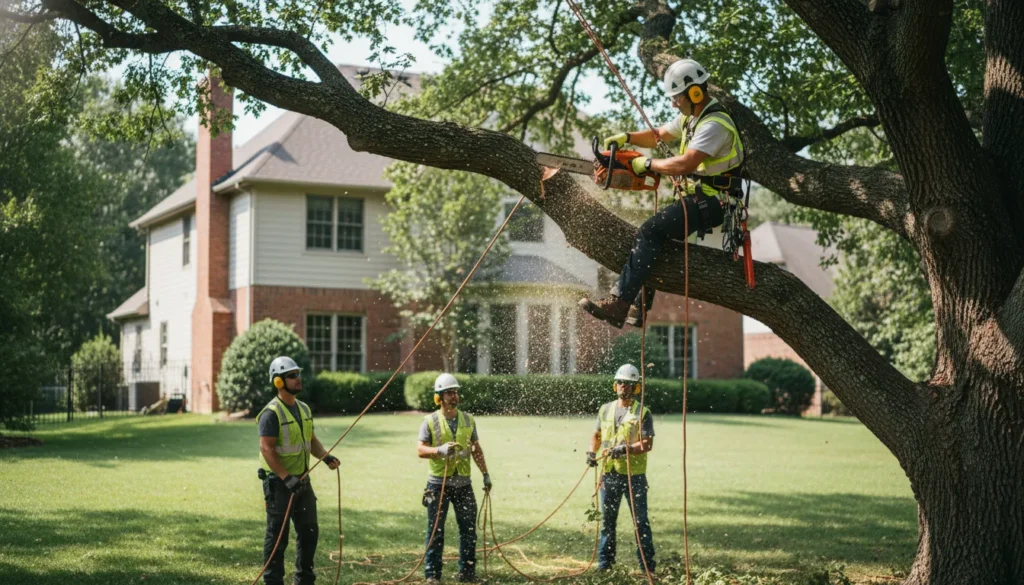
Tree cabling and bracing is the corrective or preventive response to specific structural defects that put trees — and property — at risk. Here are five signs your tree needs a professional support system.
Codominant Stems with Included Bark: Two leaders growing from the same point with bark inclusion between them create a weak union. This V shaped crotch lacks the structural wood fiber needed to hold both stems together. Under wind load or heavy canopy weight, these unions split. A steel cable or synthetic cable installed above the union redistributes the load and prevents catastrophic failure.
Visible Cracks or Splits in the Trunk: A crack running along the trunk or through a major branch union signals active structural compromise. Brace rods threaded through the split and secured with nuts and washers hold the sections together. Cabling above the failure point adds supplemental support.
Heavy Lateral Limbs Extending Over Structures: A long, load bearing lateral branch hanging over your roof or deck is a liability. Cabling that limb back to the trunk or an anchored leader reduces the chance of breakage during storms.
Previous Storm Damage: Trees that survived a storm with partial splits, hanging branches, or shifted canopy weight need stabilization. Bracing and cabling restore structural balance and prevent secondary failures.
Cavities or Decay at Major Unions: Hollow sections or visible decay caused by fungus at branch attachments weaken the tree’s ability to bear its own weight. A certified arborist can assess the remaining sound wood and install a support system that compensates for the compromised area. Ignoring decay at a union is how large trees fail without warning.
Our Tree Cabling & Bracing Process
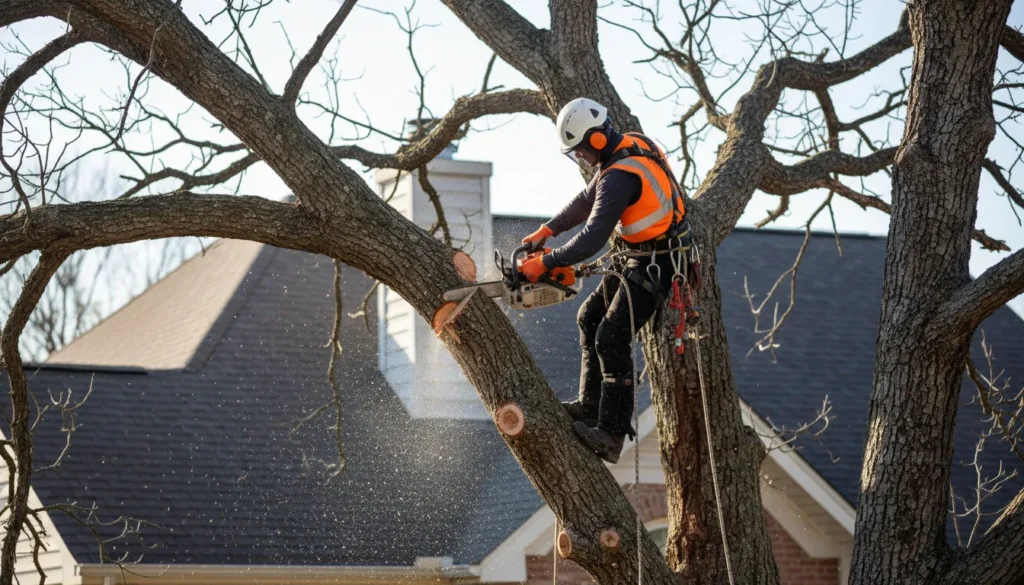
Tree cabling and bracing is a multi step process that our crew follows with precision on every job.
Tree Risk Assessment
A certified arborist inspects the tree from the root zone to the crown. We identify codominant stems, bark inclusions, cavities, cracks, deadwood, and any failure points. We document everything and photograph the defects.
System Design
Based on the assessment, we design a cabling and bracing plan. This includes cable type (steel or synthetic), hardware specifications (eye bolts, lag bolts, thimbles, swage sleeves), placement heights, and the number of support points needed.
Climbing and Rigging
Our climber ascends the tree using a saddle and harness. We rig equipment into position and prepare the installation points. If pruning is needed to reduce load or remove deadwood, we handle that first.
Hardware Installation
We drill, install anchors, thread brace rods, attach cables, and crimp or swage all connections. Every bolt gets tightened to specification. Cables get tensioned using turnbuckles or dead end hardware, depending on the system.
Inspection and Monitoring Plan
We inspect the completed system under load, verify all hardware is secure, and provide you with a written monitoring schedule. Annual inspections keep the support system performing as designed.
Brands We Use
Quick Cut Tree Service uses professional grade products from these trusted manufacturers:








Your tree’s structural support depends on components built for the job.
Other Services
Tree cabling and bracing
Tree cable installation
Supplemental tree support system
Tree cabling service
Arborist cabling service
Codominant stem repair
Tree bracing service
Brace rod installation
Structural tree support
Professional tree cabling
Dynamic tree cable system
Tree risk assessment service
Tree support system installation
Tree stabilization service
Storm damage tree prevention
Tree support wire installation
The art of tree preservation
Fungus and decay tree assessment
Tree care science and technology
Nature friendly tree stabilization
Thought out tree cabling plan
FAQs About Tree Cabling & Bracing
What is tree cabling and bracing?
Tree cabling and bracing is the installation of supplemental support hardware — steel cables, wire rope, synthetic cables, brace rods, and bolts — to stabilize structurally compromised trees. Cabling restricts the movement of branches and leaders relative to each other. Bracing uses threaded rods to hold split or weakened unions together. Both systems work to prevent failure.
When should I get my tree cabled or braced?
The best time is before a failure occurs. If you notice a V shaped union between codominant stems, a visible crack in the trunk, or heavy lateral limbs over structures, schedule a tree risk assessment now. Storm season makes existing defects worse, so proactive installation is the smartest approach.
How long does a tree cabling system last?
Steel cable systems typically last 15 to 25 years with annual inspections. Synthetic dynamic cable systems like Cobra generally need replacement every 8 to 12 years. Hardware condition, tree growth, and weather exposure all affect lifespan.
Can cabling save a tree that's already splitting?
In many cases, yes. If the split hasn’t progressed past the point of no return and enough sound wood remains, a combination of brace rods and cables can stabilize the tree and prevent further separation. A certified arborist needs to assess the damage first.
Does tree cabling hurt the tree?
Invasive systems require drilling into the wood, which creates small wounds the tree compartmentalizes over time. Non invasive synthetic systems use straps and slings that don’t penetrate the bark. Both methods are safe when installed by a qualified tree care professional following ANSI A300 guidelines.
How much does tree cabling and bracing cost?
Pricing depends on the tree’s size, the number of cables and brace rods needed, access difficulty, and hardware type. Quick Cut Tree Service provides free on site estimates after a thorough inspection. Most residential cabling and bracing jobs are affordable compared to the cost of full tree removal or property damage from a failure.